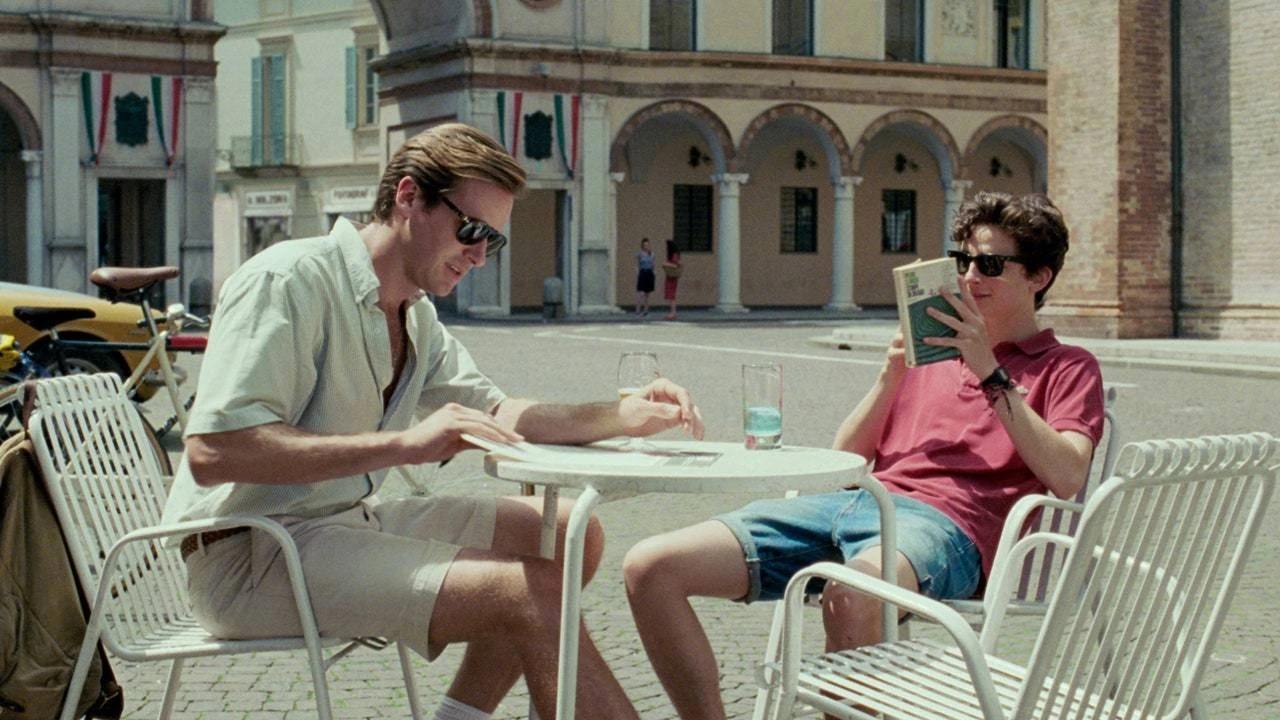
There is a particular pleasure in a book you can hold in one sitting — the way the whole thing stays in your head at once, the ending and the beginning in conversation with each other, nothing lost to days between sessions. These eight books are all under 200 pages, and none of them are slight. Each one is doing exactly as much as it needs to do and no more. Clear a Saturday. Make coffee. Begin.
Meursault, a French Algerian, shoots an Arab man on a beach and cannot explain why — not because he doesn't know, but because the question doesn't interest him in the way everyone expects it to. Camus's novel is one of the strangest and most precise accounts of alienation ever written: a man who refuses to perform the emotions society requires of him, and what that refusal costs. The prose is flat, clean, and completely controlled. You'll finish it in three hours and think about it for years.
View on Amazon →An American man in Paris falls in love with an Italian bartender and cannot bring himself to acknowledge it — cannot, and will not, until it destroys everything around him. Baldwin wrote this in 1956, the year after Go Tell It on the Mountain, and his American publisher refused it. It's a novel about shame and desire and the specific cowardice of people who know what they want and choose something else. The Paris it describes is cold and beautiful and entirely merciless.
View on Amazon →Everyone in the village knew Santiago Nasar was going to be killed. The killers told people. People told other people. And yet nobody stopped it. García Márquez reconstructs the morning of a murder years after the fact, interviewing witnesses, tracing the sequence of misunderstandings and small failures that allowed an inevitable thing to happen. It reads like a Greek tragedy crossed with a detective story and takes about two hours. One of the most formally perfect novels ever written.
View on Amazon →A single day in London, 1923. Clarissa Dalloway prepares for a party. Septimus Warren Smith, a shell-shocked veteran she will never meet, moves through the same city. Woolf invented the novel that contains both of them — interior, associative, alive to the texture of consciousness in a way no one had managed before. It's technically demanding but not difficult: you give it your attention and it gives you everything back. The most important short novel in English.
View on Amazon →Salinger's only story collection contains some of the finest American short fiction of the twentieth century — including "A Perfect Day for Bananafish," "For Esmé — with Love and Squalor," and "Uncle Wiggily in Connecticut." The stories circle around the same preoccupations as The Catcher in the Rye — innocence, phoniness, the cost of sensitivity in a world that doesn't reward it — but the form suits him even better than the novel. Read them in order, in one sitting, and notice how the whole thing accumulates.
View on Amazon →A journalist investigating the life of one of the fathers of the atomic bomb ends up on a Caribbean island presiding over the end of the world. Vonnegut's 1963 novel is a satire, a science fiction novel, a meditation on religion, and one of the funniest books ever written about human extinction. The chapters are short — some just a paragraph — and the whole thing moves at a pace that makes 300 pages feel like 150. The invented religion of Bokononism, with its concept of the "karass," is one of fiction's great inventions.
View on Amazon →Tony Webster is in his sixties when a small inheritance forces him to re-examine something that happened forty years earlier — a friendship, a girlfriend, a letter he wrote, a suicide. Barnes's Booker Prize-winning novella is a masterclass in unreliable memory: the way we edit our own histories, the convenient versions of events we construct and then mistake for the truth. It takes about three hours to read and rewards rereading immediately. The ending lands like a door closing in a quiet room.
View on Amazon →Gregor Samsa wakes up one morning to find he has been transformed into a giant insect. His family, who depended entirely on his income, must work out what to do with him. Kafka's novella is the strangest and most perfectly constructed short work in the Western canon — genuinely funny, genuinely horrifying, and genuinely unresolved in the way that real things are unresolved. You can read it in two hours. You will not finish thinking about it for much longer than that.
View on Amazon →