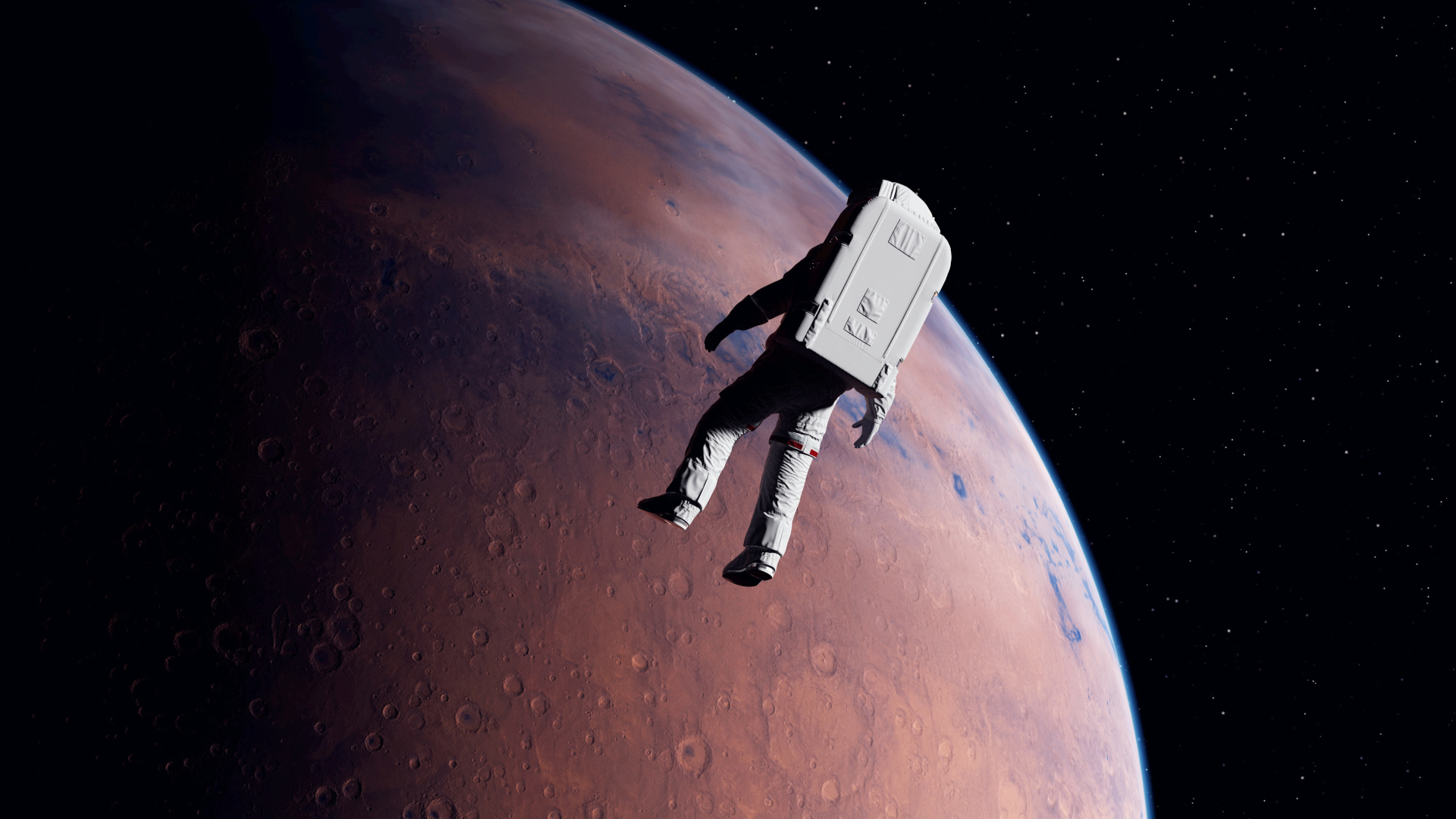
Andy Weir’s Project Hail Mary works because it does several things at once and makes all of them look easy. It’s a survival story, a first-contact novel, a science puzzle, and a buddy comedy — and the fact that one of the buddies is an alien who communicates through musical tones somehow never feels ridiculous. The book moves fast, explains real science without talking down to you, and lands an ending that earns its emotion instead of borrowing it. These eight books share at least one of those qualities. A few of them share all of them.
The obvious place to start, and it belongs here because nothing else captures the same feeling quite as well. Mark Watney is stranded on Mars, presumed dead, and has to science his way to survival using duct tape, potatoes, and a level of optimism that borders on clinical. Weir wrote it the same way he wrote Hail Mary — real math, real chemistry, real orbital mechanics — but the voice is what carries it. Watney is funny in the way people are funny when the alternative is panic. If you read Hail Mary first and haven't gone back to this one, it's even better than you've heard.
View on Amazon →A physicist gets abducted and wakes up in a version of his life where he made different choices — same city, same face, completely different reality. Crouch builds the science carefully enough that you buy it, then uses it to ask a question that has nothing to do with physics: if you could see the life you might have lived, would you still choose this one? It reads in a single sitting. The pacing is relentless in a way that feels engineered, because it is. If the part of Hail Mary you loved was the I-can't-put-this-down momentum, this is your next book.
View on Amazon →A security robot hacks its own governing module, gains free will, and mostly uses it to watch television and avoid making eye contact with the humans it's supposed to protect. The Murderbot Diaries are science fiction that works the same way Hail Mary does — technically precise, genuinely funny, and more emotionally affecting than you expect from a story about a socially anxious killing machine. This first novella is under 200 pages. You'll read all six within a month.
View on Amazon →Ellie Arroway picks up a signal from Vega. The signal contains instructions for building a machine. Nobody knows what the machine does. Sagan was an actual astrophysicist, and the science in Contact is as rigorous as anything Weir writes — but the ambition is bigger. This isn't a survival story, it's a novel about what happens to a species when it learns it isn't alone. It moves slower than Hail Mary and asks harder questions, but the sense of wonder is the same. The ending divides people. It shouldn't — it's earned.
View on Amazon →A writer researching a book about the father of the atomic bomb stumbles into a story about ice-nine — a substance that freezes all water it touches, forever. Vonnegut takes a real scientific concept, pushes it to its logical extreme, and wraps it in a novel that's somehow 200 pages long, hilarious, and devastating. The connection to Hail Mary isn't obvious until you think about it: both books are about what happens when a single scientific discovery can end or save the world, and both understand that the people making those discoveries are just people — flawed, funny, ordinary.
View on Amazon →Robert Langdon — Harvard symbologist, perpetual wearer of Harris Tweed — attends a presentation by a former student who claims to have answered two of humanity's biggest questions: where do we come from, and where are we going? The student is murdered before he can reveal his discovery, and the rest is Dan Brown doing what Dan Brown does: codes, conspiracies, sprinting through beautiful European architecture. It's not hard science fiction, but it scratches the same itch as Hail Mary — a smart protagonist solving a puzzle at speed, with the fate of something enormous hanging in the balance. Pure entertainment, no apologies needed.
View on Amazon →You know the movie. The book is better, darker, and significantly more interested in the science. Crichton walks you through the genetics of de-extinction with the same patient clarity that Weir uses for astrophage biology — and then lets the consequences loose. The dinosaurs are terrifying in a way the film only hints at, and Ian Malcolm's monologues about chaos theory are genuinely brilliant rather than just quotable. If you liked the parts of Hail Mary where the science itself creates the tension, Crichton invented that move.
View on Amazon →The year is 2045, the real world is a disaster, and most of humanity lives inside a virtual reality universe called the OASIS. When the creator of the OASIS dies, he leaves behind a series of puzzles hidden inside the simulation — solve them and you inherit his fortune and control of the entire system. Cline's novel is a treasure hunt wrapped in 1980s nostalgia wrapped in a surprisingly earnest story about loneliness and connection. It shares Hail Mary's central pleasure: watching a smart, nerdy protagonist work through problems with enthusiasm rather than angst. A weekend read at most.
View on Amazon →