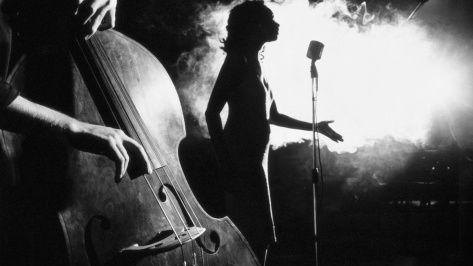
Most people who say they don’t like jazz have never actually listened to jazz — they’ve heard it in elevators and airports, which is a different thing entirely. Real jazz is as emotionally direct as any music ever made: rhythm-first, conversational, built from improvisation but shaped by discipline and structure. The difficulty is knowing where to start in a catalogue that spans a hundred years and dozens of sub-genres. These eight albums are the ones that open the door — chosen for accessibility without condescension, for emotional impact without prior knowledge required, and for the fact that each one sounds completely unlike the others. Start anywhere on this list. Then follow where it takes you.
The only mandatory starting point. Kind of Blue is the best-selling jazz album of all time for the same reason it is the best album to begin with: it is genuinely beautiful, deeply accessible, and built on a modal approach that gives the improvisation a spacious, unhurried quality that doesn't require any knowledge of jazz to appreciate. Miles Davis assembled an extraordinary band — John Coltrane, Bill Evans, Cannonball Adderley, Paul Chambers, Jimmy Cobb — and gave them minimal structures to work from. What they produced in two recording sessions in 1959 has never gone out of print, never lost its capacity to stop a room. "So What," "Freddie Freeloader," "Blue in Green" — one of the ten greatest albums ever made in any genre.
Find on Amazon →The hook is "Take Five" — the most recognisable jazz instrumental ever recorded, built on a 5/4 time signature that Paul Desmond's alto saxophone makes feel completely natural — but the album around it is just as good and just as accessible. Brubeck's piano and Desmond's saxophone have a warmth and wit that makes Time Out feel more like a conversation between friends than a formal performance, and the unusual time signatures throughout (9/8, 6/4, 3/4) never feel like obstacles. The best album for convincing someone that jazz can be both intellectually engaging and genuinely fun to listen to.
Find on Amazon →The album that brought bossa nova to the United States, and the gateway record for anyone who finds straight-ahead jazz too angular or demanding. Stan Getz's tenor saxophone is warm and breathy, João Gilberto's guitar and voice are impossibly understated, and Astrud Gilberto's barely-above-a-whisper delivery on "The Girl from Ipanema" created one of the most distinctive sounds in twentieth-century popular music. The album feels effortless in the way that only deeply achieved things do, and it rewards the kind of half-attentive weekend afternoon listening that turns occasional listeners into genuine fans.
Find on Amazon →The gateway album for people who are certain they don't like jazz. Head Hunters takes the rhythm section of funk — deep bass, locked-in groove, percussion that won't let you go — and puts Hancock's keyboard playing on top of it, blurring the distinction between jazz and funk in a way that was radical in 1973 and still sounds fresh. "Chameleon" opens with one of the great bass lines in music and never looks back. If you've been told you should listen to jazz but find yourself drawn more to Sly Stone or James Brown, start here and work backwards.
Find on Amazon →Cannonball Adderley's alto saxophone had a warmth and directness that made him the most immediately accessible of the hard bop masters, and Somethin' Else — recorded with Miles Davis sitting in as a sideman, reversing their usual dynamic — is his finest album. The title track alone is worth the price of admission: a blues-based groove played by five musicians who clearly love each other, at a tempo that feels like a late night going well. Miles Davis is the star he can't stop being even when someone else is nominally in charge. The perfect introduction to hard bop for anyone who finds bebop too fast to follow.
Find on Amazon →Bill Evans redefined what a jazz piano trio could sound like — less about display and more about conversation, the three musicians listening to each other as much as playing, the spaces between the notes as important as the notes themselves. Portrait in Jazz is the album where that approach first fully crystallised, recorded shortly after Evans left Miles Davis's band following the Kind of Blue sessions. It is among the most purely beautiful albums in all of jazz: intimate, melancholy, technically extraordinary in ways you can appreciate without understanding them. "Autumn Leaves" and "Blue in Green" — the latter a co-write with Miles Davis — remain two of the most recorded jazz standards for reasons that become obvious immediately.
Find on Amazon →Art Blakey's drumming is the most physical in jazz — propulsive, insistent, making the rhythm feel like something you can lean against — and Moanin' is the album that captures it at its most exciting. Bobby Timmons's title track opens with a gospel-drenched piano figure that has been covered hundreds of times, but the original is still the best: hard bop at its most direct and joyful, a reminder that jazz before abstraction was fundamentally music for moving and feeling. Lee Morgan's trumpet and Benny Golson's tenor saxophone are both exceptional. The album to play for someone who thinks jazz is background music.
Find on Amazon →The most ambitious album on this list and the hardest to categorise: blues, gospel, bebop, and something approaching free jazz all present at different moments, held together by Mingus's extraordinary double bass playing and his gift for writing music that sounds like it's thinking out loud. "Goodbye Pork Pie Hat" — a tribute to Lester Young, who died during the recording sessions — is one of the most moving pieces in the jazz canon. "Better Git It in Your Soul" opens with a gospel shout that abolishes the distance between the sacred and the secular. Once you've heard it, you'll understand why Mingus is spoken of in the same breath as Ellington and Davis as one of the music's great architects.
Find on Amazon →BONUS
Robert Glasper has spent two decades building a bridge between jazz piano and hip-hop, R&B, and neo-soul, and Black Radio III is the most fully realised version of that project. Guest vocals from Common, Killer Mike, Ledisi, Meshell Ndegeocello, and India.Arie give the album a contemporary accessibility that none of the other records on this list have — this is jazz made by someone who grew up on both Miles Davis and J Dilla, and it sounds like both. It won the Grammy for Best R&B Album in 2023, which is both accurate and slightly beside the point: it's also the best contemporary jazz album of the last five years, and the most convincing argument that the music is still alive and talking to the present.
Find on Amazon →