Rolling Stone just published its list of the 100 greatest guitar solos of all time. You already know the top five — Purple Rain, Comfortably Numb, Hotel California, Eruption, Stairway. You don’t need us to tell you those are great. What you might need is someone to go through the other 95 and pull out the ones worth your time — the solos you haven’t heard, the ones you’ve heard but never really listened to, and the ones that will change how you think about what a guitar can do. That’s what this list is. Ten solos from Rolling Stone’s 100 that deserve more of your attention than another spin of Free Bird.
George Clinton told Eddie Hazel to play like his mother had just died. Hazel played for ten minutes straight, alone, over a stripped-back rhythm track, and what came out is one of the most devastating pieces of recorded music in any genre. It doesn't sound like a guitar solo. It sounds like grief given an instrument and told to speak. There's no flash, no speed, no pyrotechnics — just tone, vibrato, and the kind of emotional precision that makes you forget you're listening to a Fender Stratocaster. Most people know Funkadelic as George Clinton's funk project. This isn't funk. This is a man alone with a guitar and a feeling he can't name. If you've never heard it, set aside ten minutes, put on headphones, and don't do anything else.
View on Amazon →Before Chuck Berry. Before Little Richard. Before Elvis heard a single note of rock and roll. Sister Rosetta Tharpe was playing electric guitar in front of gospel congregations in the 1940s with a style so fierce and rhythmic that it invented the vocabulary everyone else would borrow. This recording is from 1944 — the year D-Day happened — and it sounds like the future arriving early. She plays a Gibson SG with a swing and an attack that wouldn't become mainstream for another fifteen years. Rolling Stone putting her at 34 is one of the most important things on the entire list. The woman who started everything finally getting named.
View on Amazon →Ernie Isley was 21 when he recorded the guitar part on That Lady, and he'd grown up watching Jimi Hendrix rehearse in his family's living room — literally, Hendrix lived with the Isleys as a session guitarist in 1964 before anyone knew his name. You can hear that education in every note: the wah-wah, the sustain, the way the solo rides on top of one of the greatest funk grooves ever recorded. Most guitar-solo lists are dominated by white rock bands. This is the corrective. Ernie Isley took everything Hendrix taught him and put it inside a soul song, and the result is six minutes of proof that the guitar solo was never just a rock thing.
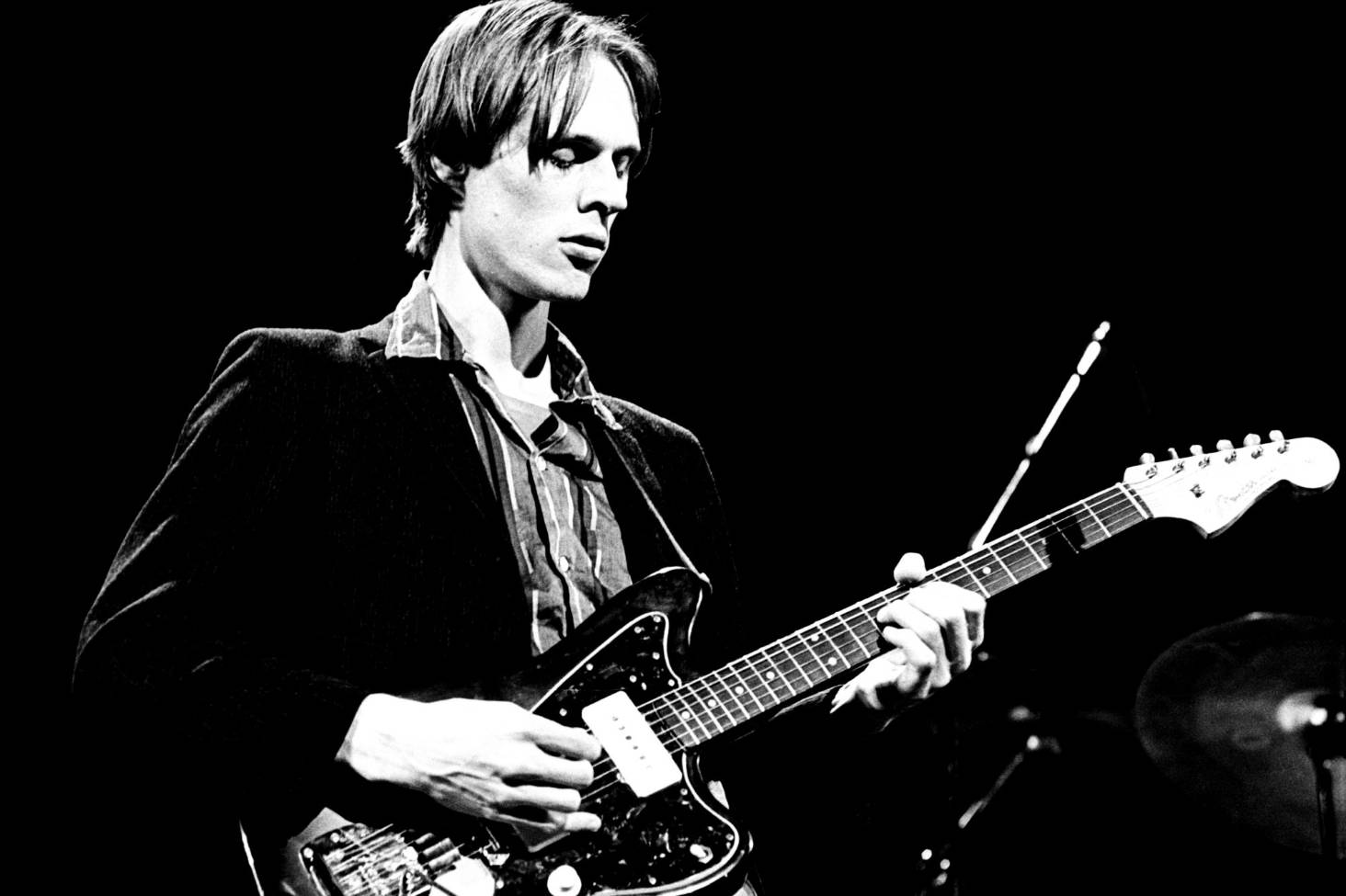
View on Amazon →This one doesn't sound like anything else on any guitar list, ever. Tom Verlaine and Richard Lloyd came out of the same CBGB punk scene as the Ramones, but instead of playing three chords fast they played hundreds of notes with the precision of jazz musicians and the restlessness of people who'd listened to too much John Coltrane. The solo on Marquee Moon is ten minutes long. It spirals upward through the song's structure, building tension without ever resorting to volume or distortion. The tone is thin, sharp, almost brittle — and it's perfect. Radiohead, Sonic Youth, and every post-punk band that followed owes something to these ten minutes. If you know only one thing from CBGB, it's probably the Ramones. This is the other thing, and it might matter more.
View on Amazon →Here's what happened: the band finished the main song — a tight, riff-driven Keith Richards rocker — and thought they were done. But Mick Taylor kept playing. He launched into a solo, the rhythm section came back in one by one, Bobby Keys picked up his saxophone, and for the next three and a half minutes they jammed their way into something nobody planned. The tape was rolling. Nobody stopped it. What emerged is the best thing the Rolling Stones ever recorded, and most people have never heard it because it's an album track on Sticky Fingers, buried behind Brown Sugar and Wild Horses. The solo is loose, fluid, Latin-inflected, and completely unlike anything else in the Stones catalog. It's the sound of a band surprising themselves.
View on Amazon →Duane Allman played slide guitar with a glass Coricidin cold medicine bottle on his ring finger. He was 24 years old when this was recorded live at the Fillmore East, and he had seven months left to live before a motorcycle accident in Macon, Georgia. None of that context is necessary to hear what's happening in the solo — it's Southern blues played with the improvisational fluency of jazz, every note sliding into the next with a vocal quality that makes the guitar sound like it's singing in a language that predates words. But the context makes it heavier. Duane Allman was the best slide guitarist who ever lived, and he left almost no studio recordings. This live version is the document. Treat it accordingly.
View on Amazon →In 1982, Stevie Ray Vaughan was a nobody from Austin playing a borrowed guitar. He got a slot at the Montreux Jazz Festival — a jazz festival — and played Texas blues at a volume and intensity the audience wasn't prepared for. Parts of the crowd booed. David Bowie was sitting in the back and hired him on the spot to play on Let's Dance. Jackson Browne offered him free studio time that same night. The recording that came out of those sessions became this song. The solo is pure Texas blues with the sustain turned up to a place nobody had taken it before — every bent note held so long it vibrates in your chest. SRV died in a helicopter crash at 35. This was his opening statement.
View on Amazon →Neil Young's solo on Powderfinger sounds like it could fall apart at any second. It doesn't. That's the whole point. Young has always played guitar like a man who learned three techniques and then decided that feel mattered more than the other ninety-seven. The solo is raw, slightly out of tune, and played with so much distortion that the notes blur into each other — and it's one of the most emotionally honest pieces of guitar playing ever recorded. The song is about a young man on a river seeing a boat approach and not knowing whether it's friendly. The guitar sounds exactly like that uncertainty feels. Young once said he'd rather play one note with feeling than a hundred without it. This solo is the proof.
View on Amazon →This is the entry on Rolling Stone's list that will send you down a rabbit hole. Mdou Moctar is a Tuareg guitarist from Niger who learned to play on a homemade instrument and became a star across the Sahel through cellphone file-sharing before any Western label knew he existed. Afrique Victime is seven minutes of desert rock — hypnotic, repetitive, building in intensity until Moctar's guitar breaks free and starts doing things that sound like Hendrix filtered through a tradition that's thousands of years older than the blues. If you think you know what a guitar solo can sound like, this will reset that assumption entirely. The most genuinely surprising entry on the entire list, and the one most likely to change what you listen to next.
View on Amazon →Jack White recorded this with one guitar, one amp, no overdubs, and Meg White hitting a drum kit like she was trying to settle a personal grudge. Ball and Biscuit is seven minutes of garage blues played by a man who treats the electric guitar like a weapon he's not fully in control of — the solo is loose, aggressive, and recorded so hot that the signal distorts in a way that sounds intentional even when it probably wasn't. In an era when guitar solos were supposed to be dead — killed by grunge, replaced by laptops — White walked into a room with the cheapest possible setup and proved that the form still had a pulse. No effects pedals. No studio trickery. Just volume and conviction. Sometimes that's all a solo needs.
View on Amazon →