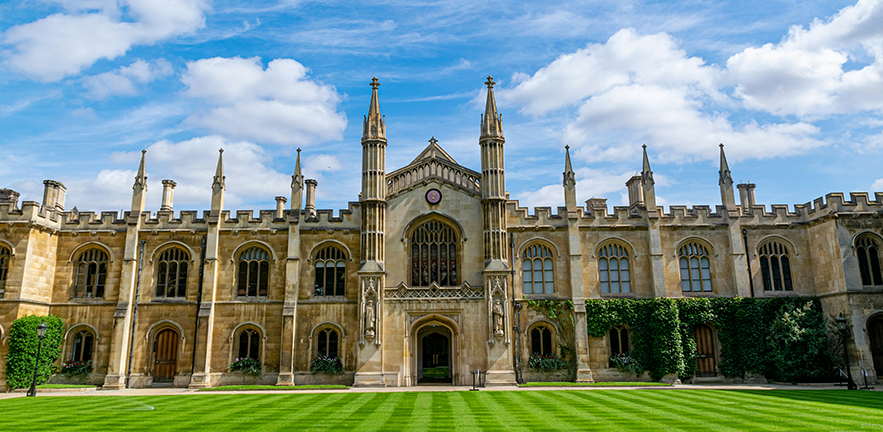
There’s a version of your life where you studied English literature at a serious university — sat in small seminars, argued about unreliable narrators, learned to read a sentence the way a musician reads a score. Maybe you did, and you’ve forgotten half of it. Maybe you studied something practical instead and always wondered what you missed. Either way, this is the list. Not a syllabus — nobody’s grading you. Just ten books that do what the best literature courses do: they change the way you pay attention. These are the ones that show up on reading lists at Oxford, Harvard, and the kind of small liberal arts colleges where people still smoke cigarettes and talk about Chekhov at dinner. You don’t need the degree. You just need the books.
A former slave living in post-Civil War Ohio is haunted — literally — by the baby she killed to save from slavery. Morrison doesn't let you look away and she doesn't let you simplify it. The prose operates at a level most novelists never reach: dense, musical, and so precisely constructed that individual sentences change how you understand the paragraph before them. Beloved won the Pulitzer, and when it didn't win the National Book Award, 48 Black writers and critics signed a public letter of protest. It's taught in every serious English program in the country because there's nothing else to teach alongside it. It stands alone.
View on Amazon →Ask an English professor what the greatest novel in the language is and they'll hesitate, weigh several options, and then say Middlemarch. It's 900 pages about a small English town in the 1830s — doctors, clergymen, landowners, a young woman who marries the wrong man for the right reasons — and it contains everything. Marriage, ambition, money, politics, science, faith, failure, reform. Eliot writes about her characters with a moral intelligence that makes most other novelists look like they're guessing. It's long. It earns every page. The kind of book you finish and immediately understand why people devote their careers to studying it.
View on Amazon →Seven generations of the Buendía family live, love, fight, and repeat their mistakes in the fictional Colombian town of Macondo, while the town itself rises from nothing, flourishes, and is slowly forgotten. García Márquez writes about ghosts and miracles and impossible events with the same calm authority that other novelists use to describe breakfast. The effect isn't whimsy — it's a way of telling the truth about history, memory, and power that realism can't access. When this book was published in 1967 it changed what fiction was allowed to do. It opened English-language readers to the idea that a novel could be simultaneously mythic and precise, magical and political, funny and devastating.
View on Amazon →A steamboat captain travels up the Congo River to find a man named Kurtz who has gone mad in the interior of Africa. The novella is 100 pages long and it has generated more academic argument than novels ten times its length. Conrad — a Polish man writing in English, his third language — produced prose so layered and morally ambiguous that scholars are still arguing about whether the book is a critique of colonialism or an example of it. Chinua Achebe called it racist. Others call it the most honest depiction of imperial violence in English literature. Both readings are defensible, which is exactly why it's taught. It doesn't tell you what to think. It makes you do the work yourself.
View on Amazon →Not Ulysses. Ulysses is homework — brilliant, essential, and genuinely difficult in a way that requires either a professor or a very patient reading group. Dubliners is fifteen short stories about ordinary people in early twentieth-century Dublin, and it will teach you more about prose than any creative writing workshop. Joyce wrote these when he was 25, and every one of them builds toward a moment he called an "epiphany" — not a religious experience but a sudden, quiet recognition that changes everything the story has meant up to that point. The last story, "The Dead," is widely considered the greatest short story in the English language. It earns that reputation in its final paragraph, which is one of the most beautiful passages anyone has ever written.
View on Amazon →An unnamed Black man moves from the South to Harlem and discovers that no one — not white liberals, not Black nationalists, not college administrators, not communist organizers — actually sees him. They see what they need him to be. Ellison wrote this novel with a jazz musician's sense of rhythm and structure: the prose shifts registers constantly, moving from naturalism to surrealism to satire within a single chapter, and it all holds together. He spent seven years writing it. It was his only completed novel. It won the National Book Award in 1953 and remains one of the most important American novels ever published — a book about identity, performance, and the specific violence of being looked through.
View on Amazon →A family plans a trip to a lighthouse. They don't go. Ten years pass. They go. That's the plot. What Woolf does inside that plot is something no novelist had done before: she writes consciousness itself, the way thoughts arrive and dissolve, the way memory and perception and desire operate simultaneously in a mind that is also trying to butter toast and talk to its children. The middle section — "Time Passes" — covers a decade of death, war, and decay in about twenty pages of prose so compressed it feels like poetry. If Mrs Dalloway is Woolf's most famous novel, this is her best. It's a book about art, family, and the way time takes everything and gives nothing back except the attempt to hold it still.
View on Amazon →Written in the 1390s. Still funny. A group of pilgrims traveling from London to Canterbury agree to tell stories to pass the time, and what emerges is a portrait of medieval England that's funnier, filthier, and more modern than anyone expects. The Wife of Bath's prologue — a woman's defense of her five marriages and her right to sexual pleasure — reads like it could have been written last year. Chaucer invented English literature in the sense that he proved the English language could do what Latin and French had been doing: tell stories with sophistication, wit, and psychological depth. Read a good modern translation first. Then try the Middle English. It's closer to modern English than you think, and the rhythm is extraordinary.
View on Amazon →Mary Shelley was 18 years old, staying at a villa on Lake Geneva with Percy Shelley and Lord Byron, when they challenged each other to write ghost stories. She wrote Frankenstein. It was published in 1818, anonymously, because a novel by a teenage woman about science, creation, and moral responsibility wasn't something the literary establishment was prepared to take seriously. Two centuries later it's one of the most widely studied novels in the English language. It invented science fiction. It asked questions about what we owe the things we create that haven't been answered yet. And the monster — who is articulate, lonely, and genuinely sympathetic — is nothing like the version in the movies. The book is better, stranger, and sadder than the myth.
View on Amazon →Okonkwo is a respected leader in an Igbo village in what is now Nigeria. Then the British missionaries arrive. Achebe wrote this novel in 1958 — partly as a direct response to the version of Africa that Conrad presented in Heart of Darkness — and it became the most widely read African novel ever published. The prose is deceptively simple: short sentences, plain language, a storytelling rhythm borrowed from oral tradition. But the simplicity is the point. Achebe doesn't need Conrad's dense, coiling prose to tell you what colonialism does to a culture. He shows you a world that works — its rituals, its justice, its contradictions — and then he shows you what happens when someone arrives and decides it doesn't count. If Heart of Darkness is on this list, this has to be here too. They're in conversation, and Achebe gets the last word.
View on Amazon →