Eastern Europe is the part of the continent that rewards the traveller who moves slightly off the obvious path. The cities here are dense with history — wars, occupations, resistances, rebuildings — and that history is visible in ways that the more thoroughly touristed cities of Western Europe have long since polished away. The food is serious, the cost of living is low by Western standards, and the crowds, outside of a handful of obvious centres, are manageable even in summer. These eight cities represent the full range of what the region offers: medieval, industrial, Soviet, Ottoman, Hanseatic, Baroque, and entirely contemporary.
Warsaw is the most misunderstood capital in Europe. Destroyed almost completely during the Second World War — 85% of the city was rubble by 1945 — it was rebuilt from historical records, paintings, and photographs, a reconstruction so thorough that the Old Town was awarded UNESCO World Heritage status not for its age but for the act of rebuilding itself. The result is a city that carries its history differently from others: not as something inherited but as something chosen, reconstructed, insisted upon. The food scene has exploded in the last decade, the nightlife is some of the best on the continent, and the Praga district on the east bank of the Vistula — gritty, creative, rapidly changing — is the most interesting neighbourhood in Poland.
Don't miss: The Warsaw Rising Museum — the most emotionally demanding museum in Europe, documenting the 1944 uprising against Nazi occupation with complete historical honesty. The Praga district on a Friday night, when the bars and restaurants in the repurposed factories and warehouses fill with the city's creative class. And the Palace of Culture and Science — Stalin's gift to Warsaw, loathed and loved in equal measure, now home to cinemas, theatres, and the best view of the city from its observation deck.
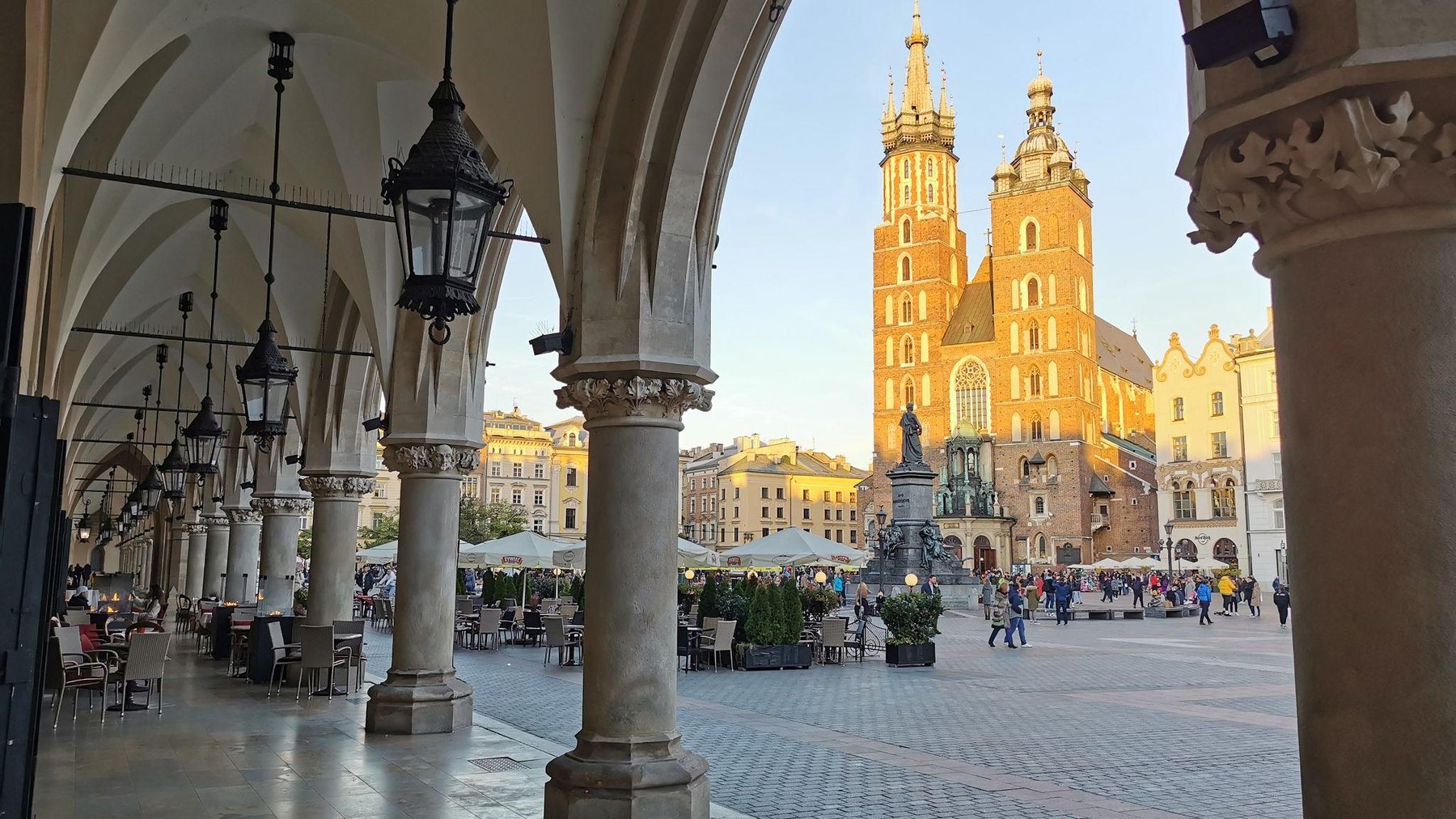
Poland Travel Guides on Amazon →Kraków survived the Second World War largely intact — the retreating Germans had no time to demolish it — and the result is one of the best-preserved medieval city centres in Central Europe. The Rynek Główny, the main market square, is vast and beautiful and lined with cafés that somehow remain affordable despite the city's popularity. The Kazimierz district, the old Jewish quarter, has been gradually transformed over the past two decades into the city's most interesting neighbourhood: synagogues alongside bars, Jewish heritage alongside contemporary restaurants, the weight of history alongside something genuinely alive.
Don't miss: Wawel Castle, rising above the Vistula on its limestone hill — the seat of Polish kings for five centuries, now housing a remarkable collection of tapestries and medieval art. The Wieliczka Salt Mine, thirty minutes outside the city — a UNESCO World Heritage Site where miners over seven centuries carved chapels, ballrooms, and sculptures entirely from salt, three hundred metres underground. And the Kazimierz food scene, which has quietly become one of the best in Poland.
Poland Travel Guides on Amazon →Ljubljana is the capital of a country smaller than New Jersey and the most pleasant city on this list to simply exist in. The old town sits below a castle on a hill, its Baroque and Art Nouveau architecture reflecting in the Ljubljanica River below, the pedestrianised centre so compact that you can walk from one end to the other in twenty minutes. The triple bridge — three bridges crossing the river in a fan — is one of the most photographed sights in Central Europe, and the outdoor café culture along the riverbanks, from April to October, rivals anything in Vienna or Paris. The city is also the gateway to a country of extraordinary natural beauty: Lake Bled an hour away, the Soča Valley two hours, the Adriatic coast two and a half.
Don't miss: The Central Market on a Saturday morning, where farmers from the surrounding countryside sell cheese, honey, vegetables, and cured meats under the colonnade designed by Jože Plečnik, Slovenia's greatest architect. The castle at night, when the city below it is lit and the crowds have gone home. And the day trip to Lake Bled — the most impossibly beautiful lake in Central Europe, with a small island and a clifftop church that photographers have been trying to do justice to for a century.
Slovenia Travel Guides on Amazon →Lviv sits in western Ukraine and has historically been as much Central European as Eastern — it was Polish, Austro-Hungarian, and briefly German before becoming Soviet, and the architecture of the old city reflects all of those layers simultaneously. The coffee culture here is among the most serious in Europe: Lviv considers itself the birthplace of coffee in Central Europe, and the cafés in the old town take the claim seriously. The city has been designated a UNESCO World Heritage Site, and its medieval and Renaissance buildings have survived wars that destroyed almost everything around them. Visiting now carries weight — the city has become a symbol of Ukrainian cultural identity — and that weight is part of what makes it worth going.
Don't miss: The High Castle Hill for the view over the city's rooftops and towers. The Rynok Square, the market square at the city's centre, lined with Renaissance townhouses from a dozen different architectural traditions. The Lviv Coffee Mine — theatrical and slightly absurd, but genuinely good coffee served in a cave beneath the old town that captures something real about the city's relationship with the drink. Check current travel advisories before planning.
Eastern Europe Travel Guides on Amazon →Tallinn's old town is a genuine medieval city — not reconstructed, not polished, but the actual thing, a walled Hanseatic trading port whose towers and merchant houses and cobbled streets have survived relatively intact since the thirteenth century. The UNESCO-listed upper and lower towns are separated by a limestone escarpment, with the Toompea hill above looking down on the merchant quarter below exactly as it did when the city was one of the most important trading posts on the Baltic. Modern Tallinn extends well beyond the walls and is one of Europe's most digitally advanced cities — Estonia invented Skype, introduced digital voting before almost anywhere else — which creates a productive tension between the medieval and the contemporary.
Don't miss: The view from the Kohtuotsa viewing platform on Toompea Hill at dusk, when the red rooftops of the lower town glow below the walls. The Telliskivi Creative City, a former industrial complex now home to the city's best restaurants, bars, and independent shops — the most interesting neighbourhood in the Baltics. And the Estonian Open Air Museum outside the city, where farmsteads and windmills from across the country have been relocated and preserved in a pine forest.
Baltic Travel Guides on Amazon →Tbilisi is the kind of city that people visit for a weekend and stay for a month. The old town — sulphur baths steaming beneath the cliff, a fortress above, balconied wooden houses leaning over narrow streets — is one of the most atmospheric urban environments in the world, and the food and wine scene has emerged in the last decade as one of the most serious in Europe. Georgia claims to have invented wine — the evidence supports it, with winemaking traditions dating back eight thousand years — and the natural wine movement here predates the Western European version by millennia. The city also operates at a cost of living that makes everything feel possible.
Don't miss: The Abanotubani sulphur bath district, where you can rent a private room in one of the domed bathhouses and soak in mineral-rich water that has been used since the fifth century. The Narikala fortress above the old town, reached by cable car, with views over the Mtkvari River and the city below. And the Dezerter Bazaar — the city's main market, chaotic and brilliant, where churchkhela (walnut-studded grape-must candy) hangs in rows and the spice stalls fill the air with something you'll remember for years.
Georgia Travel Guides on Amazon →Plovdiv is one of the oldest continuously inhabited cities in Europe — older than Rome, older than Athens, older than most things — and the layers are visible: Thracian, Roman, Byzantine, Ottoman, Bulgarian Revival, and contemporary all present within walking distance of each other. The old town on the Three Hills is a UNESCO World Heritage Site, its nineteenth-century Bulgarian Revival houses — colourful, cantilevered upper floors projecting over cobbled streets — some of the most beautiful domestic architecture in the Balkans. Plovdiv was European Capital of Culture in 2019 and the arts infrastructure built for that year has become permanent: galleries, music venues, and creative spaces that punch well above the city's size.
Don't miss: The Roman amphitheatre, built in the second century AD, still used for concerts and performances — one of the best-preserved in the world and discovered only in 1972 during a landslide. The Kapana district, the old craftsmen's quarter, now the city's creative hub — independent restaurants and bars in a labyrinth of pedestrian streets that becomes genuinely lively after dark. And the food, which is exceptional and inexpensive by any European standard.
Bulgaria Travel Guides on Amazon →Gdańsk is where the Second World War started — the first shots were fired at the Westerplatte peninsula on September 1, 1939 — and where the movement that ended the Cold War began: Solidarity was founded in the Lenin Shipyard here in 1980. That history is present throughout the city, but so is something lighter: a Hanseatic merchant city on the Baltic coast, its Long Street lined with tall, ornate merchant houses rebuilt after wartime destruction in the original style, its amber shops and Gothic churches giving it a character distinct from any other Polish city. The nearby beach resort of Sopot, twenty minutes by train, is one of the best in the Baltic.
Don't miss: The European Solidarity Centre — the museum built on the site of the Lenin Shipyard where Solidarity was born, one of the finest museum experiences in Poland. The Long Market, the pedestrianised main street, at the golden hour when the merchant house facades catch the light from the west. And the amber — Gdańsk is the amber capital of the world, and the market for it, from rough Baltic pieces to worked jewellery, is unlike anything elsewhere in Europe.
Poland Travel Guides on Amazon →BONUS
Prague is on this list because it genuinely deserves to be, not as a concession. The crowds are real — the city receives millions of visitors a year and the tourist centre can feel overwhelmed in summer — but the architecture is so extraordinary and so intact that it remains one of the most beautiful cities in Europe regardless. Gothic, Baroque, Art Nouveau, and Cubist buildings exist within walking distance of each other in a centre that survived the twentieth century's wars relatively unscathed. The trick is simple: cross the river. The tourist centre is almost entirely on the right bank. Malá Strana, Smíchov, and Vinohrady on the left and the wider left bank are where Praguers actually eat and drink, at prices and crowd levels that belong to a different city.
Don't miss: The Charles Bridge at 6am before the crowds arrive — one of the great urban experiences in Europe. The Franz Kafka Museum in Malá Strana, small and precise and genuinely illuminating about a writer whose city shaped him completely. And the Beer Spa — slightly ridiculous, completely Czech, and one of those experiences that only makes sense in context.
Prague Travel Guides on Amazon →